

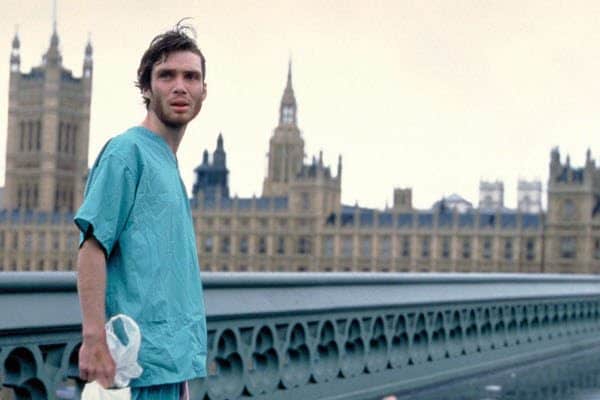
I still remember the exact moment 28 Days Later changed everything for me. I was in middle school, living with my grandmother at the time, and we’d just gotten back from Blockbuster with our usual haul: pizza from the local mom and pop shop, and a stack of DVD rentals from Blockbuster. She always let me choose at least one, and that night I grabbed this movie with a guy walking alone through an empty London. I had no idea what I was getting into. Within the first ten minutes, I was hooked. Those weren’t your typical shambling zombies; these things sprinted. The rage virus didn’t just kill you; it turned you into pure, screaming fury. And that soundtrack? John Murphy’s “In the House, In a Heartbeat” hit differently than anything I’d heard before. Plus, seeing Christopher Eccleston himself, get torn apart by infected was both thrilling and traumatic for a kid who would get into Doctor Who a few years later.
28 Days Later became my favorite zombie movie that night, and honestly? It still is. Now, little more than two decades later, Danny Boyle and Alex Garland are finally bringing us back into the world with 28 Years Later, releasing June 20th. I’m equally parts hyped and terrified, because this isn’t just another sequel for me, this is a franchise I literally grew up with.
Why 28 Days Later Still Hits Different
Look, I know everyone says their favorite horror movie “changed the genre,” but 28 Days Later actually did. Before 2002, zombies were slow, methodical, and kind of predictable. George Romero had established the rules, and everyone else followed them. Then Danny Boyle and Alex Garland came along and asked “what if zombies could run?” and suddenly everything changed.
The movie wasn’t just about fast zombies though, it was shot on gritty video that made everything feel uncomfortably real. While most other horror movies were going bigger and more polished, 28 Days Later felt more like found footage of the actual apocalypse. That rawness is part of why it still works today when you watch it. It doesn’t feel dated; it feels urgent and relevant.
And can we talk about that emotional storytelling? Frank’s infection and death still guts me every single viewing. Selena’s survival instincts, the way she could flip that switch from caring to brutal when needed, that character work elevated the entire zombie movie genre. This wasn’t just about surviving monsters; it was about surviving the loss of humanity itself.
You can trace 28 Days Later’s DNA through everything that came after. Train to Busan took that emotional core and ran with it. World War Z went full-scale with the fast zombie concept. Even more recently, The Last of Us owes a debt to how this movie balanced intimate character moments with large-scale horror. The rage virus might not be cordyceps, but both showed us that the scariest thing about zombie apocalypses isn’t the zombies, but what they do to the people who survive.
28 Weeks Later Was Good, But Something Was Missing
By the time 28 Weeks Later hit theaters in 2007, I was in high school and had to get my parents to buy my ticket since I wasn’t 17 yet (off by a few months!). I went alone; partly because I was that kind of teenager, partly because I didn’t want anyone else’s reactions interfering with my experience. I had high expectations, and truth be told, I was nervous.
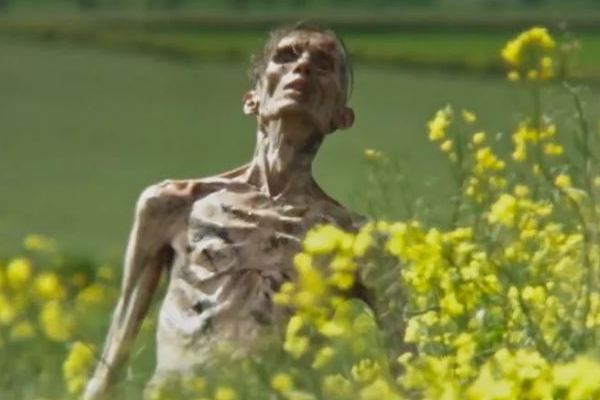
The movie delivered in some ways and fell short in others. That opening sequence with Robert Carlyle’s character abandoning his wife is still one of the most brutal, perfectly crafted horror scenes ever put to the screen. The helicopter scene, the parking garage chaos… 28 Weeks Later had bigger set pieces and a much bigger budget than its predecessor.
But something felt different. Colder, maybe? The first movie had this intimate, almost tender quality even in its darkest moments. 28 Weeks Later felt more like a traditional horror sequel; bigger, louder, but not necessarily deeper. Don’t get me wrong, it’s a solid zombie movie with an incredible cast (looking back, Idris Elba, Rose Byrne, pre-MCU Jeremy Renner, and Imogen Poots? Absolutely stacked), but it lacked that emotional weight that made 28 Days Later special.
Sitting in that theater, watching infected tear through crowds in claustrophobic spaces, I realized what I actually wanted from this franchise (if it could be called that at the time). It wasn’t just about the rage virus or fast zombies. It was about how people hold onto their humanity when the world ends. And that’s what I’m hoping 28 Years Later gets back to.

What We Know About 28 Years Later (So Far)
Here’s what’s confirmed about 28 Years Later, and honestly, it’s got me a tad optimistic:
*Danny Boyle is back directing, with Alex Garland returning to write.
*This isn’t just one movie, but a start of a new trilogy if it does well. The second movie is already set for January 2026.
*Cillian Murphy is returning, though his role is still under wraps. He is confirmed to be in all three movies of the trilogy.
*The story picks up nearly three decades after the original outbreak.
*They’re keeping plot details locked down tighter than a military quarantine zone.
The fact that Boyle and Garland are both back gives me hope. These aren’t just hired guns coming in to cash a check, they created this world, and they understand what made it special. Cillian Murphy returning as Jim (presumably) feels right too. The guy went from unknown British actor to Oscar winner, but he’s never forgotten his horror roots.
What I’m really curious about is how they’ll handle the time jump. Twenty-eight years is a long time in any world, but especially one recovering from a rage virus outbreak. Are we looking at a rebuilt society? Scattered survivor communities? Something in between? I don’t need skyscrapers falling or CGI zombie hordes. I need moments like Selena hesitating with that machete, wondering if the person in front of her is still human.
Growing Up With Zombies (And Why I’m Nervous)
Here’s the thing about waiting 18 years for a sequel to your favorite zombie movie: you’ve had a lot of time to think about all the ways it could go wrong. I’ve watched the zombie genre explode and evolve in ways nobody could have predicted in 2007. We’ve had zombie comedies (Shaun of the Dead, Zombieland), zombie romances (Warm Bodies), zombie action movies (World War Z), and even zombie TV shows that ran for over a decade and have multiple on-going spin-offs (*cough* The Walking Dead *cough cough*).
Some of it has been great. Train to Busan and The Last of Us proved the genre still had emotional depths to explore, but we’ve also seen the genre get diluted, turned into parody, or blown up into generic action spectacle.
My relationship with zombie movies has definitely changed as I’ve gotten older. I’m less interested in gore for gore’s sake, but more interested in the human drama. I want to know how people maintain relationships when civilization collapses. I want to see what hope looks like when everything seems hopeless. The best zombie stories aren’t really about zombies at all; they’re about us.
That’s what scares me about 28 Years Later. What if Boyle and Garland feel pressure to go bigger, louder, or more commercial? What if they think modern audiences need more action and less of that quiet, intimate horror that made the original special? What if they over-explain the rage virus or turn it into some grand conspiracy?
But here’s what does give me hope: both filmmakers have proven they can evolve without losing their voice. Boyle went from Trainspotting to Slumdog Millionaire to Yesterday (which, off topic, I find to be his most underrated movie) without ever feeling like a different director. Garland has given us Ex Machina, Annihilation, and more recently Civil War and Warfare; all deeply personal, unsettling movies that trust their audience to think. If anyone can bring the 28 Days Later franchise back without betraying what made it special, it’s these two.
The Rage Is Back, and So Am I
In roughly two weeks, I’ll be sitting in a theater watching 28 Years Later, probably alone again like I was for 28 Weeks Later all those years ago. Except this time, I’m an adult with my own thoughts about what makes good horror, what makes effective storytelling, and what I want from the zombie movies that helped shape my taste in film.
I’m excited to see where Jim’s story goes, assuming that’s where we’re headed. I’m excited to hear whatever soundtrack is cooked up for the movie. I’m excited to see if Boyle and Garland can recapture that perfect balance of intimate character work and large-scale horror that made 28 Days Later timeless.
Most of all, I’m excited to discover that the rage virus, and my love for this weird, wonderful franchise, is still very much alive. The world might have changed in the last 18 years, but some things are worth returning to. Some stories are worth continuing. And some fast zombies are worth running from all over again.
 That Nerd Zach
One thought on “28 Years Later Is Coming, and Yeah, I’m Still Here for the Rage Virus”